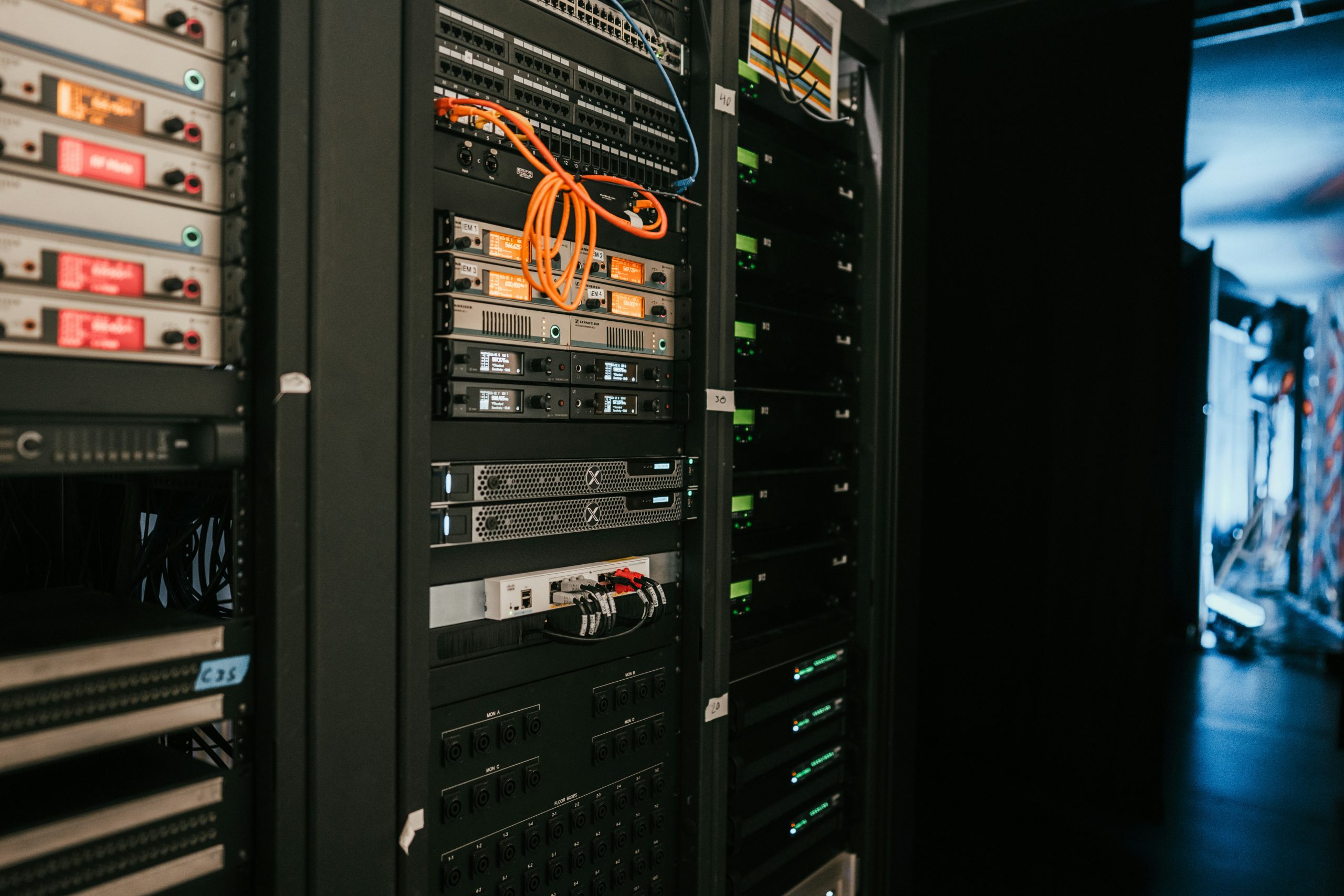
Look past the individual headlines from the past week and a pattern emerges: artificial intelligence is no longer just a race between chatbots. It’s become a contest over who controls the physical infrastructure underneath the models, who gets to build the next generation of frontier AI companies in a fractured geopolitical landscape, and who gets to watch the watchmen as these systems grow more powerful. Four stories from September 14–21, 2026 capture that shift better than any single “biggest AI news” headline could.
The infrastructure money keeps getting bigger
AI infrastructure company Crusoe raised $3.9 billion in a Series F round, pushing its valuation to $30.9 billion, as TechCrunch reported. The round was co-led by Atreides Management, Mubadala Capital, and Valor Equity Partners, with a roster of backers that includes Founders Fund, GIC, Nvidia, the Qatar Investment Authority, Radical Ventures, and TPG — the kind of investor list usually reserved for the AI labs themselves, not the companies that keep the lights on for them.
Crusoe started life in 2018 as a crypto-mining operation before pivoting hard into AI infrastructure, and it now makes money three ways: leasing data center space, renting out GPUs, and selling inference capacity directly. Its marquee project is a massive facility in Abilene, Texas that serves OpenAI, and the new capital will also fund “Spark,” a line of modular, transportable data centers designed to plug into power sources wherever they’re available rather than waiting years for traditional construction. With Meta, Microsoft, and Oracle already on its customer list, a reported $13 billion, five-year compute deal with Jane Street, and IPO conversations with Goldman Sachs and Morgan Stanley reportedly underway, Crusoe looks less like a startup and more like a utility company for the AI era — one that happens to be raising money at the same clip as the model builders it serves.
A Chinese AI unicorn’s awkward second act
Manus, the Chinese startup behind a suite of AI agents for coding, design, and video generation, is reportedly seeking $500 million at a $4 billion valuation, roughly double where it stood less than a year ago. The round is notable less for its size than for what led to it: back in December 2025, Manus — then generating more than $100 million in annual recurring revenue — agreed to be acquired by Meta for around $2 billion. Beijing blocked the deal in April 2026, citing export-control and foreign-investment concerns and, more bluntly, a reluctance to see homegrown AI talent absorbed into a Western tech giant.
What followed was a messy separation: Manus told users in August they’d need to export and back up their own data as it disentangled itself from Meta’s infrastructure, and early investors reportedly helped the company buy back its shares from Meta at close to the original $2 billion price. Now, with its founding team back in full control and prospective backers like IDG Capital, Boyu Capital, and Contemporary Amperex Technology reportedly circling alongside returning investors Tencent, HSG, and ZhenFund, Manus is essentially relaunching as a fully independent company — at double its last valuation. It’s a useful case study in how much harder cross-border AI M&A has become, and how quickly “independent again” can turn into a marketing asset rather than a setback.
Anthropic invites outside evaluators inside the building
On the governance front, Anthropic and Accenture announced a partnership to embed independent evaluators directly inside Anthropic’s model development process, with both companies expecting to invest at least $1 billion over five years to build out that capacity, according to Anthropic’s own announcement and TechCrunch’s coverage of the deal. The move fulfills a commitment CEO Dario Amodei made in his essay “We Must Pace the Frontier,” which argued that AI companies should let independent evaluators operate with something close to employee-level access — not just run periodic external audits — so they can actually observe how safety decisions get made in real time.
Led by Faculty, Accenture’s AI specialist division, the embedded team will handle model evaluation, red-teaming, alignment assessments, and safeguard testing, drawing on Accenture’s experience helping enterprises deploy AI to inform how it probes for weaknesses. Anthropic is careful to note it retains ultimate responsibility for model safety — this isn’t outsourcing accountability, it’s opening the door wider. Whether “embedded evaluator” becomes an industry norm or stays an Anthropic-specific experiment is worth watching, especially as the same week brought unrelated reports of a Google Gemini model being used in intrusion attempts against other companies and researchers reportedly using Claude to probe OpenAI’s systems — reminders of exactly the kind of dual-use risk this sort of evaluation is meant to catch early.
The capability race hasn’t slowed down either
None of this infrastructure and governance news means model development took the week off. Alibaba shipped Qwen3.8-Omni-Flash, a native omnimodal model that takes text, images, audio, and video as input and returns text, built around a 1-million-token context window and agentic tool use. Alibaba claims an average score improvement of more than 25% across 29 benchmarks compared to its predecessor, Qwen3.5-Omni-Plus, with particularly large jumps on video understanding and agent-specific tasks.
The more interesting detail is architectural: rather than processing an entire video file linearly, the model selectively attends to relevant segments — what Alibaba calls “agentic perception” — cutting token consumption by nearly 46% while simultaneously improving accuracy on video benchmarks. Pricing reflects that efficiency push too, with audio input costs down more than 98% and combined audio-visual input down roughly 93% versus the prior generation. It’s API-only for now, available through QwenCloud, Alibaba Cloud, and Qwen Studio, with no open-weight release — but it’s another sign that the gap between “understanding video” and “watching video the way a person would, selectively and cheaply” is closing fast.
What it adds up to
Put side by side, these four stories describe an industry that’s maturing in several directions at once. The money is flowing toward the physical layer — power, chips, and modular data centers — almost as aggressively as it flows toward the labs themselves. Geopolitics is now a first-order constraint on who can build and sell AI products across borders, not a footnote. Safety governance is shifting from press releases toward structural changes in how evaluators actually access frontier labs. And underneath all of it, the underlying models keep getting cheaper, faster, and more capable at tasks — like parsing an hour of video — that were genuinely hard just a year ago. No single story this week was the story. Together, they’re a decent snapshot of where AI actually stands in September 2026.
No responses yet